July - Sept 2026
New Australian SMS Sender Regulations
From 1 July 2026, new Australian regulations require businesses to register their SMS sender names.
For Latitude, all marketing and account servicing SMS messages will come from one of these registered sender names:
- Latitude
- Latitude FS
This includes account servicing messages, marketing communications and one-time passcodes (OTPs).
What this means for you
From 1 July 2026:
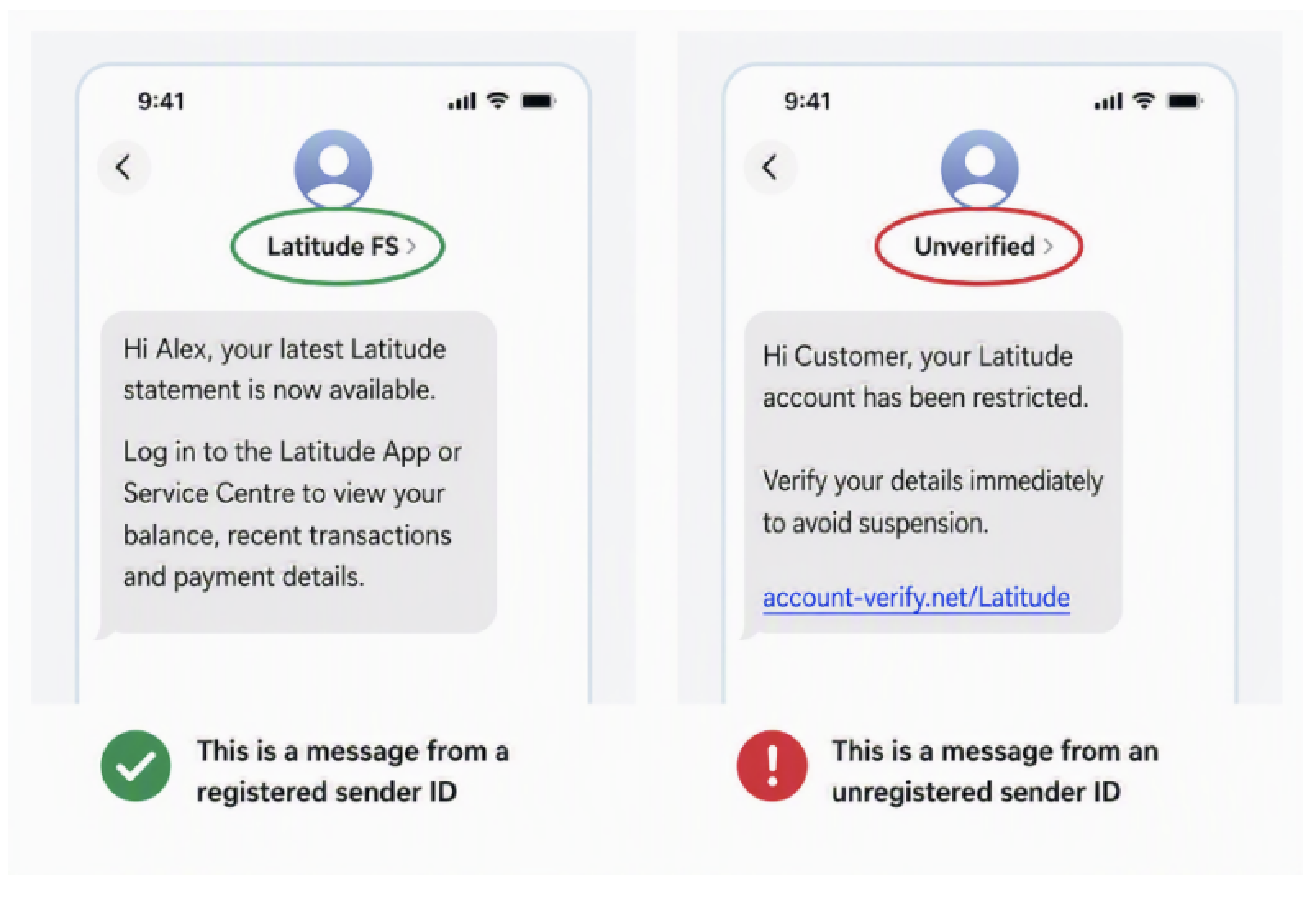
- Genuine Latitude SMS messages will display Latitude or Latitude FS
- Messages from scammers may appear similar but won't match these sender names exactly
- Some suspicious messages may be marked as "Unverified"
In some situations, such as fraud alerts, we may ask you to reply to a message to confirm a transaction. These messages may be sent from a phone number rather than a sender name.
Protect yourself from scams
Never share your one-time passcode (OTP).
Latitude will never ask you to share, read out, forward or provide your OTP by phone, email or SMS.
Be cautious of messages that:
- Come from an unverified or unexpected sender
- Ask you to click a link to verify a transaction, update details or request a refund
- Request personal information or your OTP
- Create a sense of urgency or pressure you to act quickly
If you receive a suspicious or unexpected message:
- Do not click any links
- Do not provide personal information or your OTP
- Contact Latitude directly using our website, the Latitude App or the phone number on the back of your card
We're here to help
If you're unsure whether a message claiming to be from Latitude is genuine, please contact us directly using the contact details on our website or in the Latitude App.
Tax Time Is Here – Are You Scam-Safe?
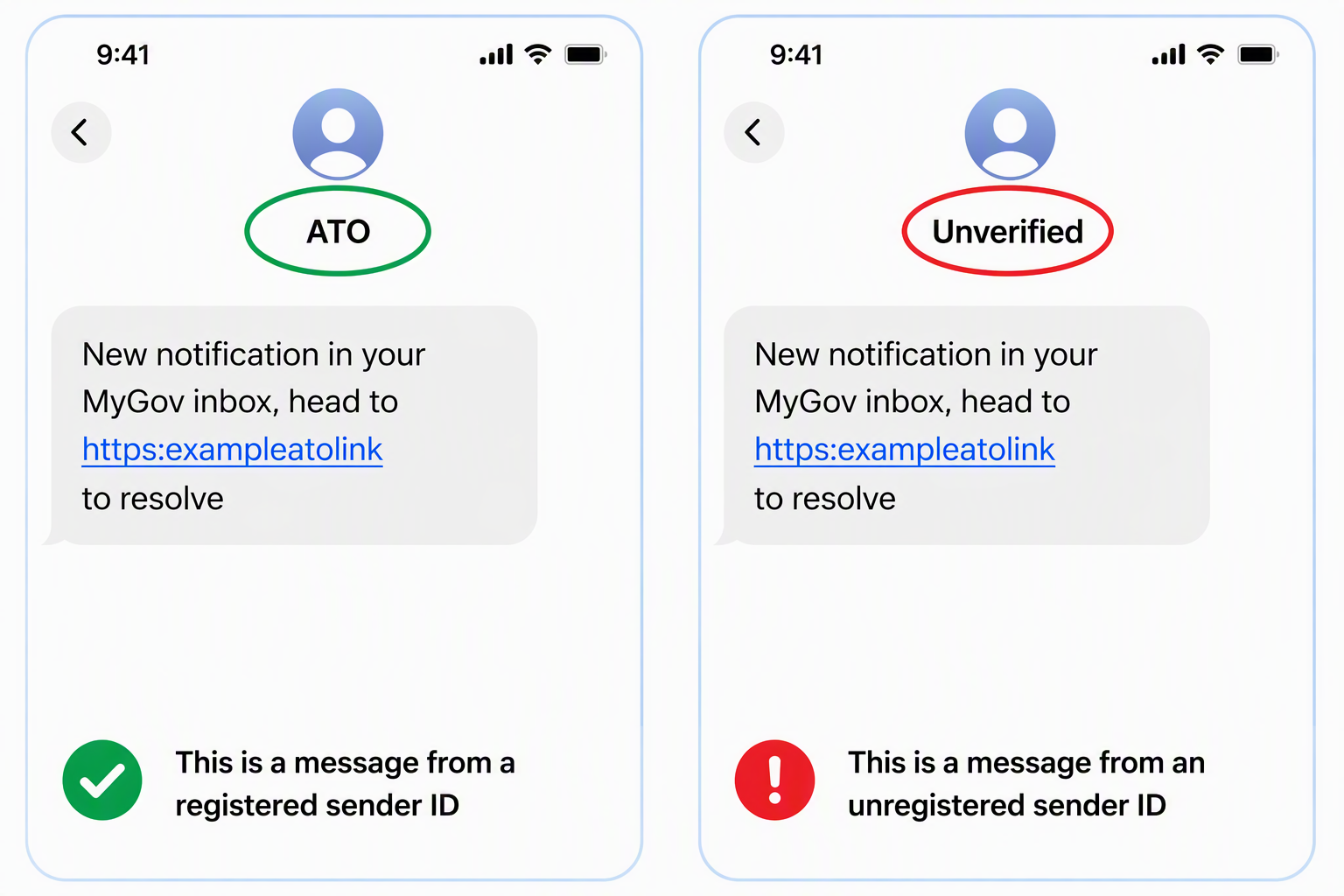
Tax time can be busy and confusing – and unfortunately, scammers know that. They often pretend to be from trusted places like the Australian Tax Office (ATO) or myGov to trick people into giving away money or personal details.
What Scammers Might Do
Scammers may:
- Say you owe money and try to scare you.
- Promise a refund to get your details.
- Send fake emails, texts, or even call you pretending to be from the Australian Tax Office (ATO) or other government services such as myGov.
It’s okay to pause and check. You don’t have to respond right away.
How can you Protect Yourself?
- Don’t Share personal information
Scammers may pretend to be from the ATO or a tax agent. If someone contacts you by email, phone, or SMS asking for personal or payment information, don’t share anything – it’s safest to hang up or delete the message. Instead, go to the official website and call the number listed there to ensure you’re speaking with the actual organisation. - Add extra security to your accounts
Turn on multi-factor authentication (MFA) for important accounts like your email, bank, social media, and any system that stores personal or customer information. It’s a simple way to keep your accounts safer. Learn how to set up MFA at cyber.gov.au. - Visit websites the safe way
Always type the web address into your browser yourself. Avoid clicking on links in emails or texts, even if they look real. - Trust your instincts
If something sounds too good to be true, it probably is. Take a moment to pause and check. If you get a suspicious message, don’t click on any links – just delete it.
Not Sure? Ask First
If you’re unsure whether a message or call is real, it’s okay to ask someone you trust or contact the ATO or myGov directly. You’re not alone – many people get these messages.